OSHA 29 CFR 1910.133 lists the minimum protective shade for each welding and cutting process by current. Start darker than you need, then go lighter only until you can see the weld zone, never below the minimum. An auto-darkening helmet's shade range has to reach the minimum for the highest current you weld at.
What a shade number is
OSHA's eye-protection fact sheet explains that a shade number indicates how much light radiation a filter lens lets through: the higher the number, the darker the filter and the less radiation reaches the eyes. Arcs and flames give off radiant energy that can injure the eyes, so welders, and anyone watching such as a fire watch or helper, need filter lenses of an appropriate shade.
The shade requirement applies to people observing as well as the welder. In a home shop, that means anyone standing near the arc needs a filter too, not just safety glasses.
OSHA's minimum shades for arc processes
| Process | Arc current | Minimum shade |
|---|---|---|
| Stick (SMAW) | Under 60 A | 7 |
| Stick (SMAW) | 60 to 160 A | 8 |
| Stick (SMAW) | 160 to 250 A | 10 |
| Stick (SMAW) | 250 to 550 A | 11 |
| MIG and flux-core (GMAW, FCAW) | Under 60 A | 7 |
| MIG and flux-core (GMAW, FCAW) | 60 to 500 A | 10 |
| TIG (GTAW) | Under 50 A | 8 |
| TIG (GTAW) | 50 to 150 A | 8 |
| TIG (GTAW) | 150 to 500 A | 10 |
| Plasma arc cutting, light | Under 300 A | 8 |
| Plasma arc cutting, medium | 300 to 400 A | 9 |
| Plasma arc cutting, heavy | 400 to 800 A | 10 |
| Air carbon arc cutting, light | Under 500 A | 10 |
| Carbon arc welding | Any | 14 |
For stick welding, OSHA's table also ties the current bands to electrode sizes (under 3/32 inch at under 60 amps up to more than 1/4 inch at 250 to 550 amps). For plasma cutting, OSHA notes the values apply where the arc is clearly seen, and that lighter filters may be used when the workpiece hides the arc.
Choosing within the minimum
OSHA's rule of thumb: start with a shade too dark to see the weld zone, then go lighter until you have enough view of the weld zone without going below the minimum. Many welders run one or two shades darker than the minimum at higher currents, for comfort over a long day.
Gas welding, brazing and oxyfuel cutting use much lighter shades (OSHA lists shade 3 for torch brazing and 4 to 6 for gas welding by plate thickness). Arc welding needs far darker lenses; a gas-welding goggle isn't protection from an arc.
What this means for an auto-darkening helmet
An auto-darkening helmet switches from a light state to a dark shade when its sensors see the arc. Its dark range has to reach the minimum for your highest-current work: a helmet that goes from shade 9 to 13 covers MIG and stick at typical home-shop currents; one with a fixed shade 11 does too but can't lighten for low-amp TIG. Many helmets also have a grind mode, a light shade for grinding with the lens held clear.
| Helmet | Shade range (maker) | Sensors (maker) | Switching (maker) |
|---|---|---|---|
| ARCCAPTAIN HSH-S800 Skeleton Knight Auto-Darkening Welding Helmet | Not stated | Not stated | 1/25000 sec |
| ARCCAPTAIN LY800F Auto-Darkening Welding Helmet | Not stated | Not stated | Not stated |
| ARCCAPTAIN LY800J Auto-Darkening Welding Helmet | Not stated | Not stated | 1/25000 seconds |
| BESTMIG MIG 135A Welding Helmet | Not stated | Not stated | Not stated |
Side protection and safety glasses
OSHA's fact sheet adds that where slag chips, grinding fragments or wire-brush bristles can fly, the welder needs side protection, which means glasses with side shields or goggles under the helmet. It also notes that when filter lenses are worn under a helmet, the helmet's lens shade may be reduced so the combined shade meets the table. Protective eye and face devices must comply with ANSI Z87.1, as 1910.133 sets out.
A worked example
You MIG weld at 90 to 160 amps and occasionally stick weld with 1/8-inch rod at about 120 amps. OSHA's minimum is shade 10 for the MIG and shade 8 for the stick. A helmet with a 9 to 13 range covers both, set at 10 to 11 for MIG and lighter for stick if you see better there. Our amperage selector shows the minimum shade for any process and current.
Machines in these notes
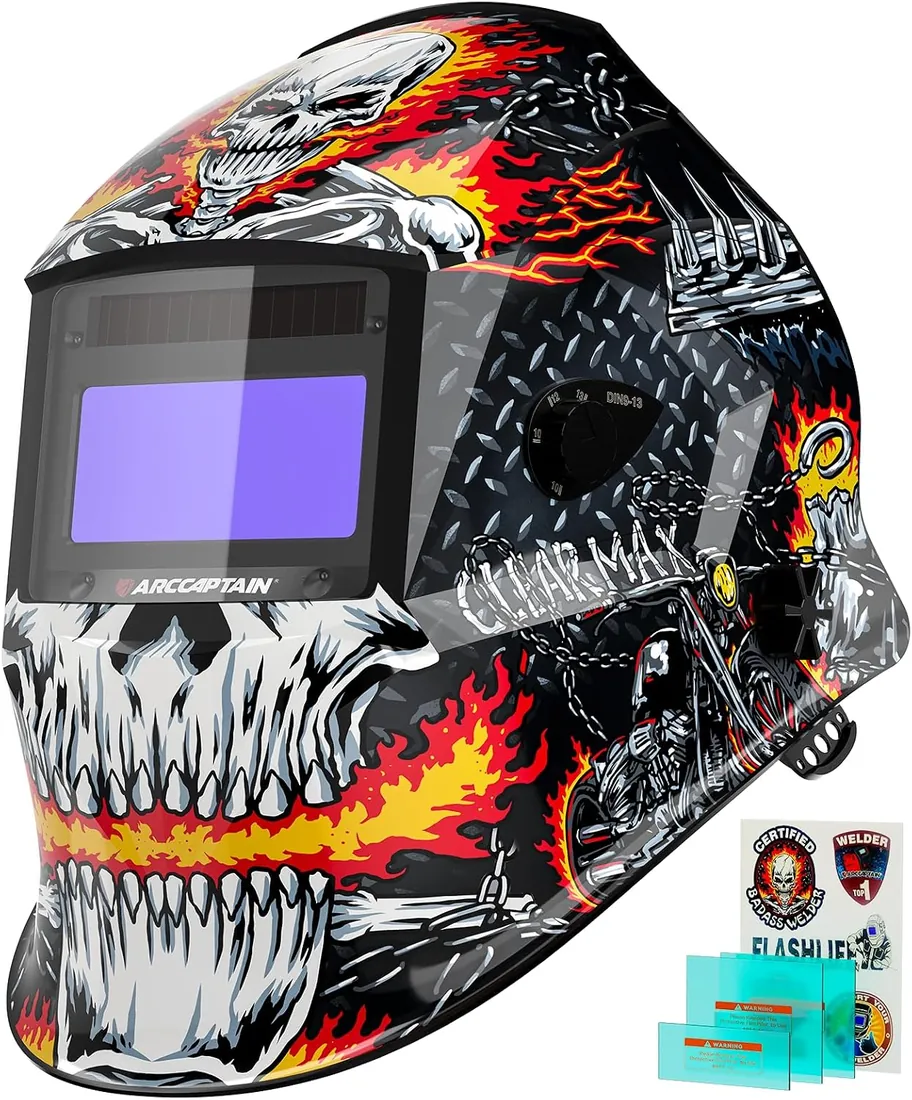
ARCCAPTAIN HSH-S800 Skeleton Knight Auto-Darkening Welding Helmet
1/1/1/1
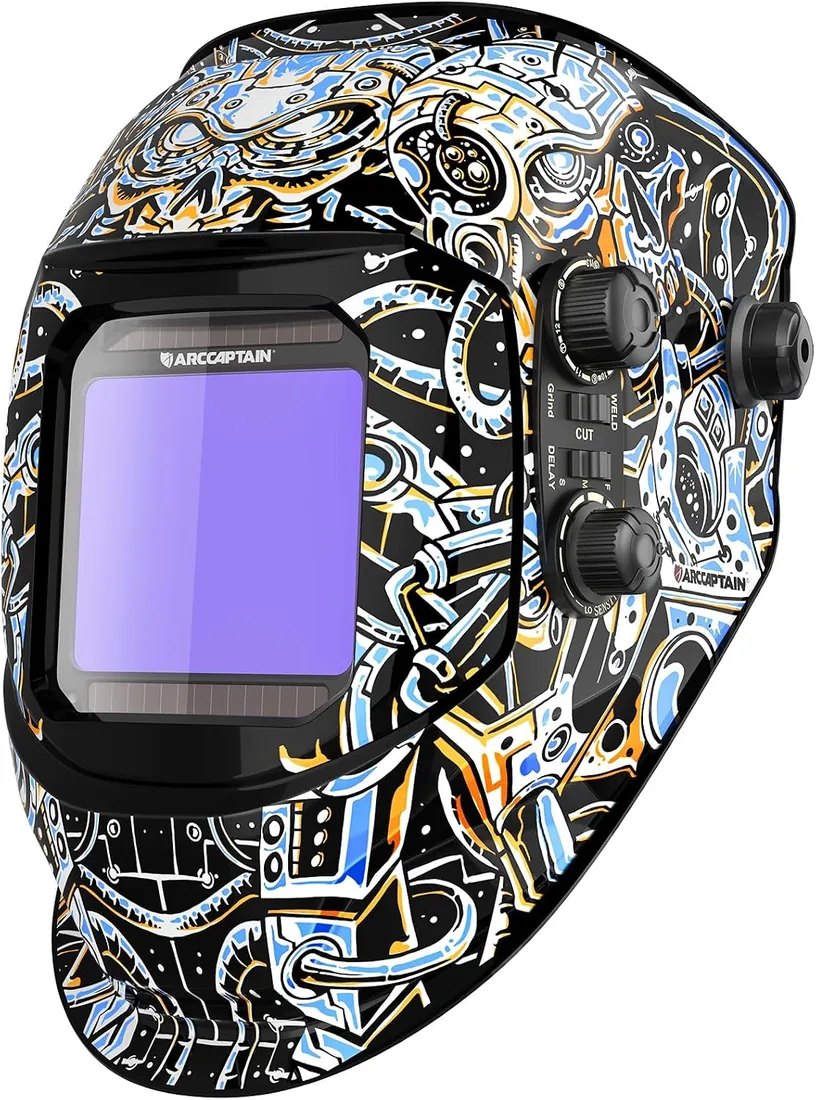
ARCCAPTAIN LY800F Auto-Darkening Welding Helmet
1/1/1/1
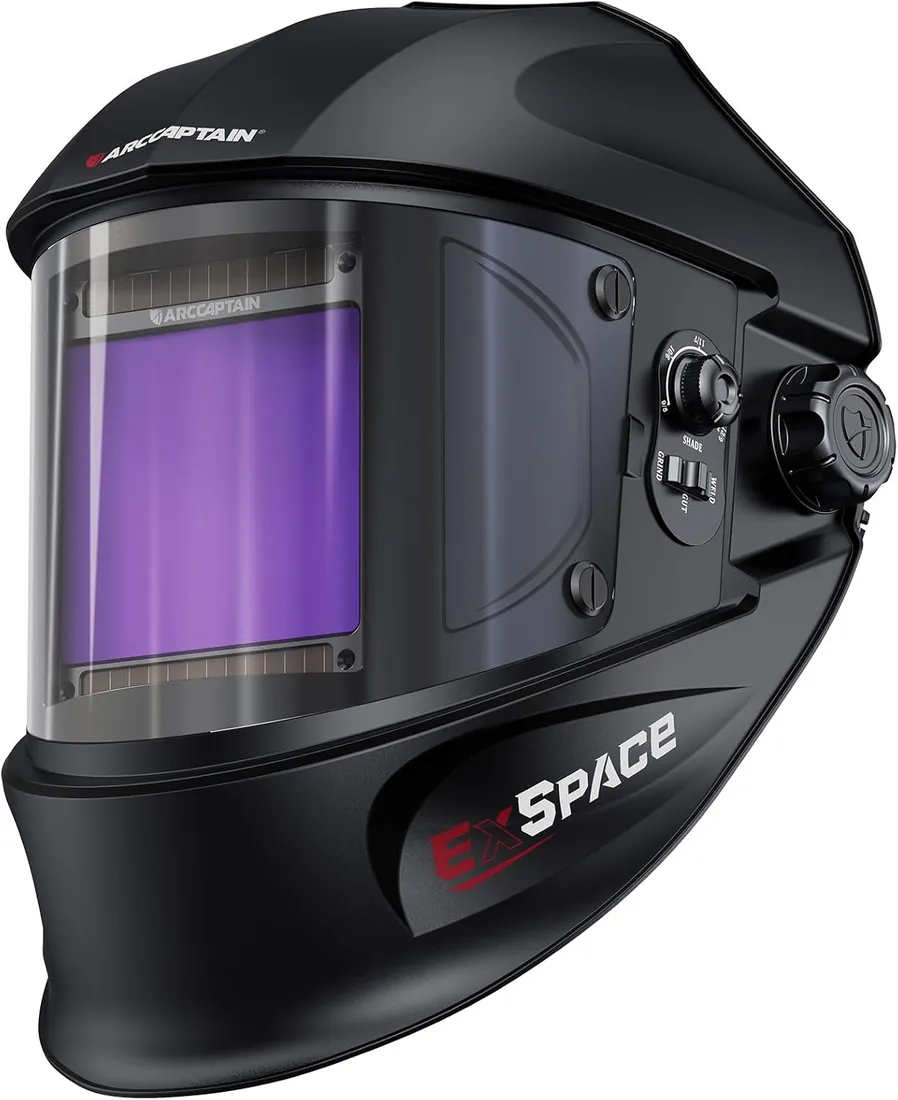
ARCCAPTAIN LY800J Auto-Darkening Welding Helmet
1/1/1/1
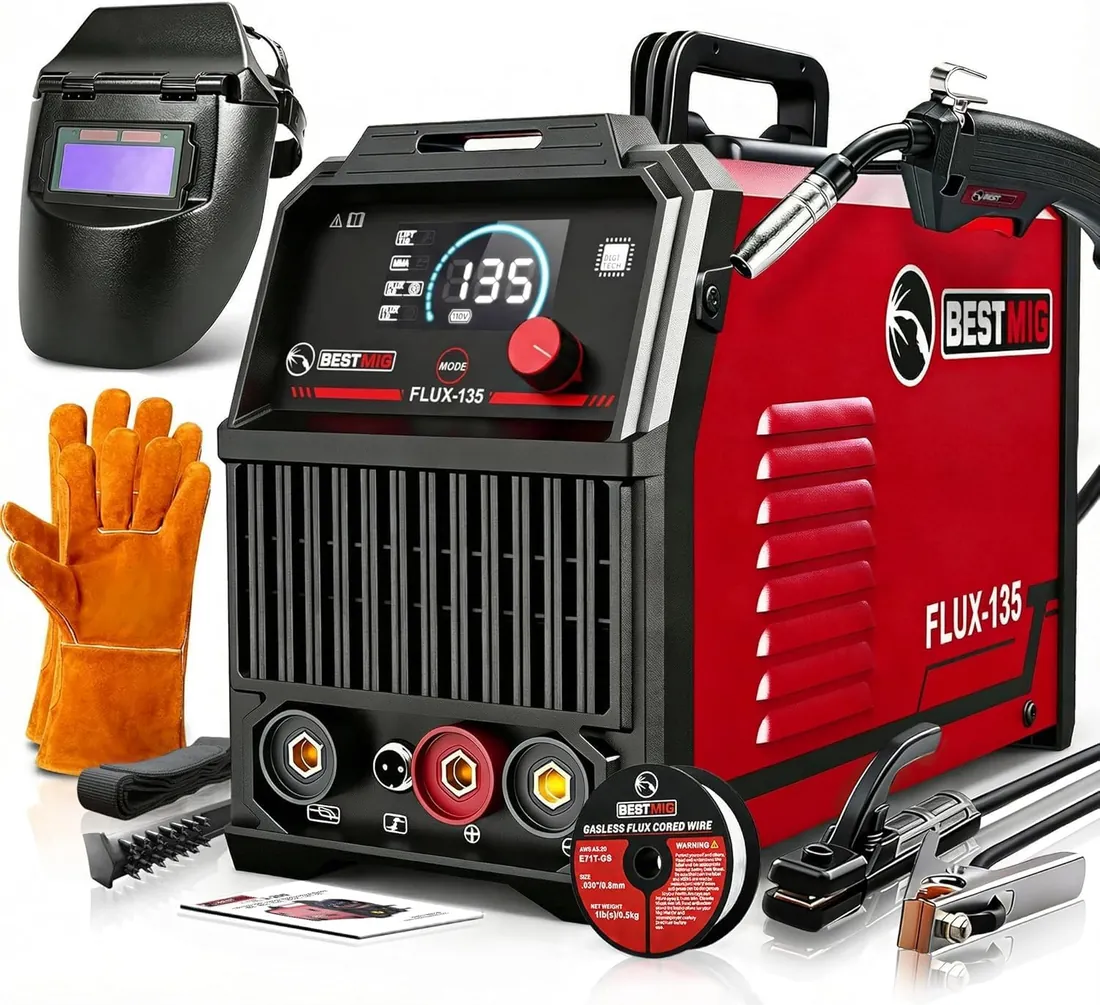
BESTMIG MIG 135A Welding Helmet
Passive