Pick the process for the work: MIG (solid wire with shielding gas) for clean, fast welds on steel and aluminium indoors; flux-core (self-shielded wire) for outdoor work and thicker steel without a gas bottle; stick for rusty or thick steel, outdoors, on a budget; TIG for thin metal, stainless, aluminium and appearance. Multi-process machines combine several in one box.
The four processes
| Process | Shielding | Learning curve | Best at | Weak at |
|---|---|---|---|---|
| MIG (GMAW) | Gas from a bottle | Easiest | Clean, fast steel welds indoors; aluminium with a spool gun | Wind and drafts blow the gas away |
| Flux-core (FCAW) | Flux inside the wire | Easy | Outdoor work, thicker steel, no bottle | Slag and spatter to clean; thin sheet |
| Stick (SMAW) | Flux coating on the rod | Moderate | Rusty or dirty steel, outdoors, repairs, low cost | Thin metal; slower; slag |
| TIG (GTAW) | Gas from a bottle | Hardest | Thin metal, stainless, aluminium (AC), appearance | Slow; needs clean metal and two hands plus a foot or finger control |
OSHA's shade table treats them separately too: MIG and flux-core need shade 10 from 60 to 500 amps, stick 8 to 11 depending on current, TIG 8 to 10. A helmet with a 9 to 13 range covers most home work in all four.
MIG and flux-core
MIG feeds a solid wire through a gun while gas from a bottle shields the weld. It's fast and easy to learn, and Miller's settings guide (1 amp per 0.001 inch, wire size by amperage, wire speed multipliers) gives a reliable starting point. Most MIG machines also run flux-core wire, which carries its own shielding inside the wire, so no bottle is needed and the weld tolerates a breeze. Flux-core leaves slag to chip off and suits steel more than sheet metal.
MIG machines in our catalog include ESAB Rogue EM 210 MIG Welder and Forney 309 MIG Welder.
Stick
Stick welding uses a flux-coated rod as the electrode. The machine is simple and the rods handle rust, paint residue and wind better than any wire process. It's slower and messier, and thin metal is hard. For farm repairs, structural steel and outdoor work, it remains the low-cost workhorse.
Stick machines in our catalog include ESAB 700734012 Stick Welder.
TIG
TIG uses a non-consumable tungsten electrode and a separate filler rod, with gas shielding. It gives the most control and the cleanest welds, and AC TIG is the classic way to weld aluminium. It's also the slowest and takes the most practice. DC-only TIG machines weld steel and stainless; AC/DC machines add aluminium. Many TIG machines also stick weld.
TIG machines in our catalog include AHP AlphaTIG 203Xi AC/DC TIG Welder.
Multi-process machines
Multi-process machines combine MIG, flux-core, stick and often DC TIG (lift-arc) in one inverter. They suit a home shop that wants to try everything without three machines. The trade-off is that each process may be less refined than on a dedicated machine, and TIG on most of them is DC only, so no aluminium. Check the maker's process list and the torch it includes; a TIG torch is often an extra.
Multi-process machines in our catalog include Eastwood MIG 180 Multi-Process Welder and TOOLIOM MIG-200 PRO Multi-Process Welder.
Matching the process to the work
| Work | Usual first choice |
|---|---|
| Car body panels, sheet metal | MIG with .023 or .030 in wire, or TIG |
| Farm and fence repairs outdoors | Stick or flux-core |
| Trailer frames, 3/16 to 1/4 in steel | 240 V MIG or flux-core, or stick |
| Stainless exhaust, art, thin tube | TIG |
| Aluminium boats and parts | AC TIG, or MIG with a spool gun |
| A bit of everything | Multi-process |
Machines in these notes
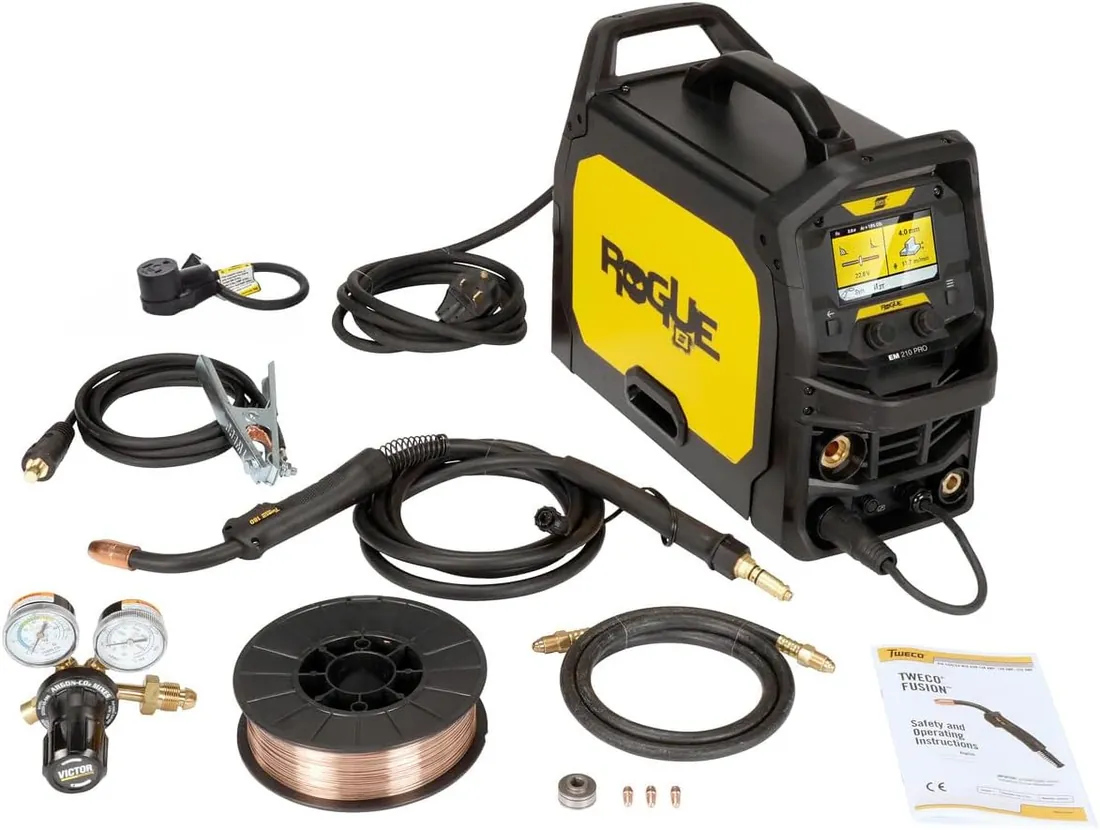
ESAB Rogue EM 210 MIG Welder
MIG / gas
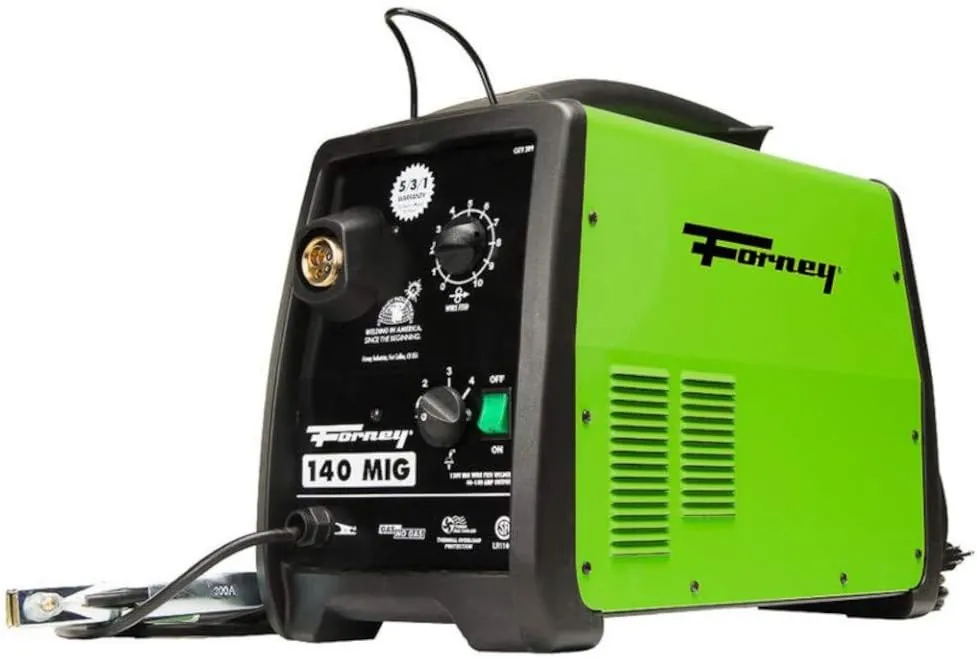
Forney 309 MIG Welder
120 V
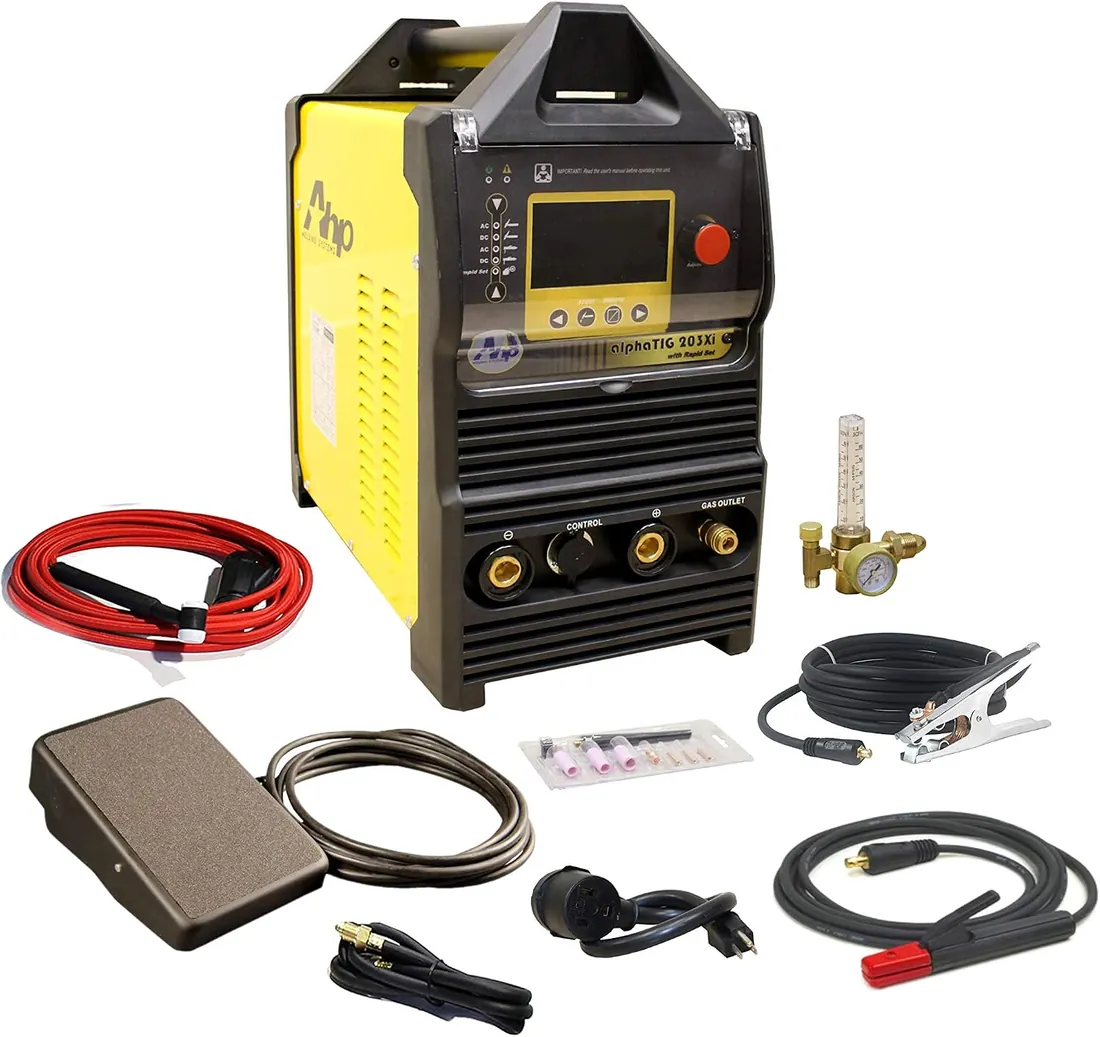
AHP AlphaTIG 203Xi AC/DC TIG Welder
220 V
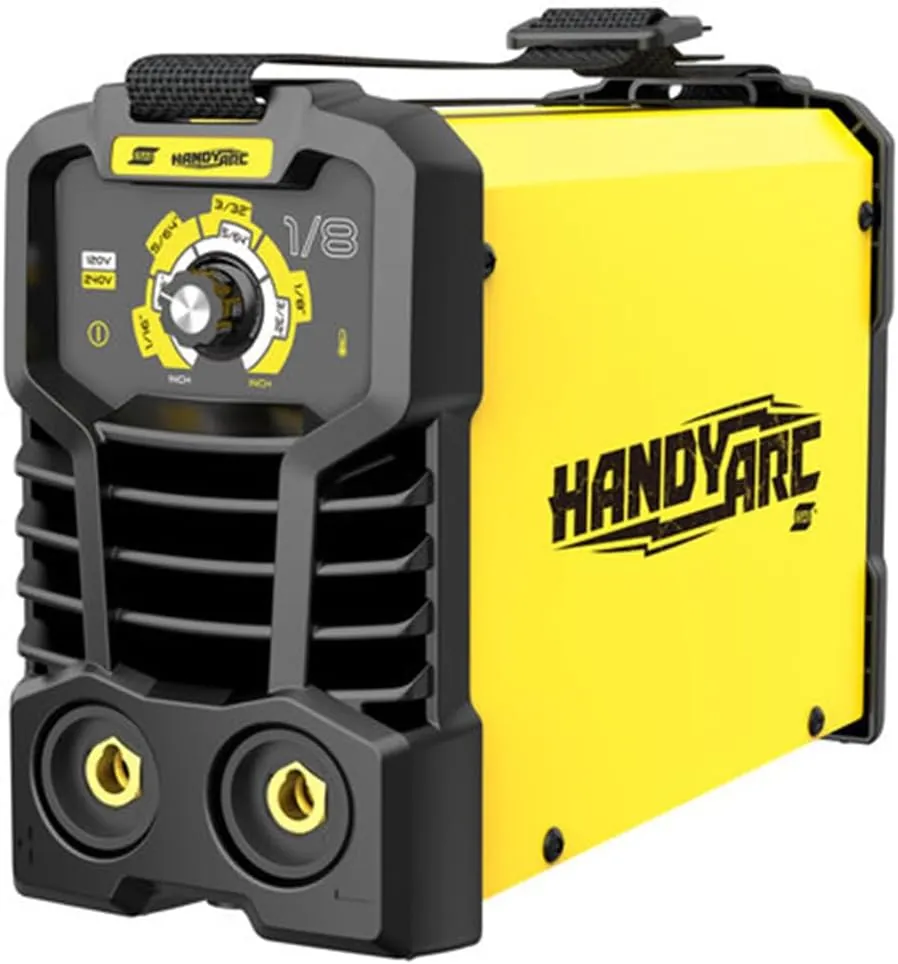
ESAB 700734012 Stick Welder
Stick inverter
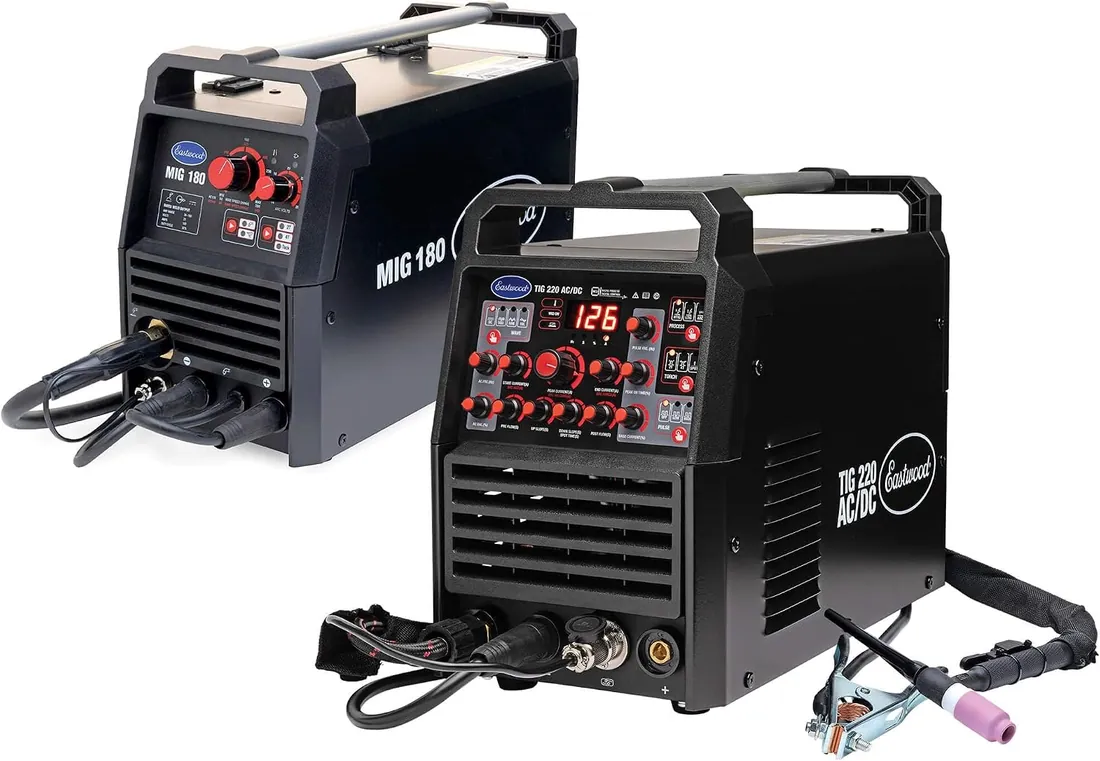
Eastwood MIG 180 Multi-Process Welder
Multi-process
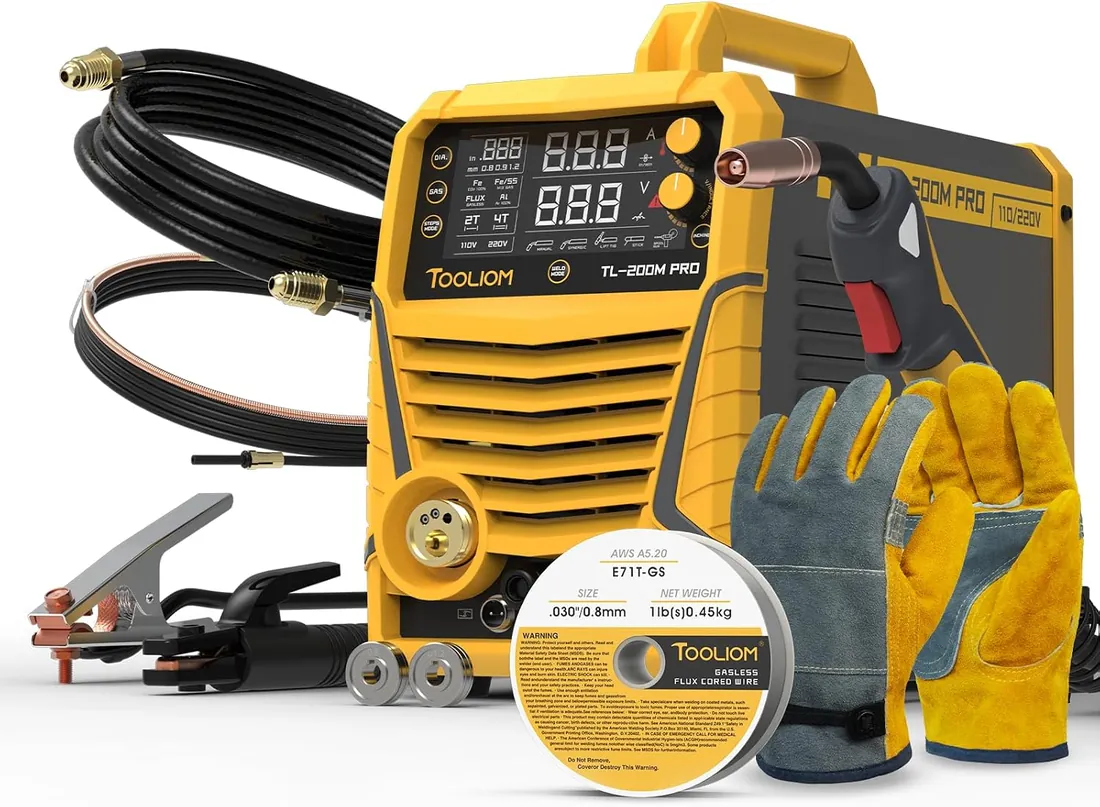
TOOLIOM MIG-200 PRO Multi-Process Welder
Multi-process